
In today’s climate of “almost PCs” as consoles, if you have PC-coding skills, there’s very little stopping you from developing a game for any platform you like. You can create, test and build all on a PC, with certain game engines making it even easier by providing a full suite of tools geared towards helping you create for your chosen platform.
In the early days of console gaming, the landscape was vastly different. Consoles had a wholly different architecture from PCs, needing very specific knowledge of their systems to develop for. This meant that to create games for consoles, you not only needed documentation from the manufacturer, but you also needed a specially designed development console that could run code either directly from a computer or be loaded onto a rewritable cartridge/disk. This made getting started prohibitively expensive, as development consoles were very different machines from their retail counterparts, with features that could potentially allow for piracy if made widely available.
Cool Kit
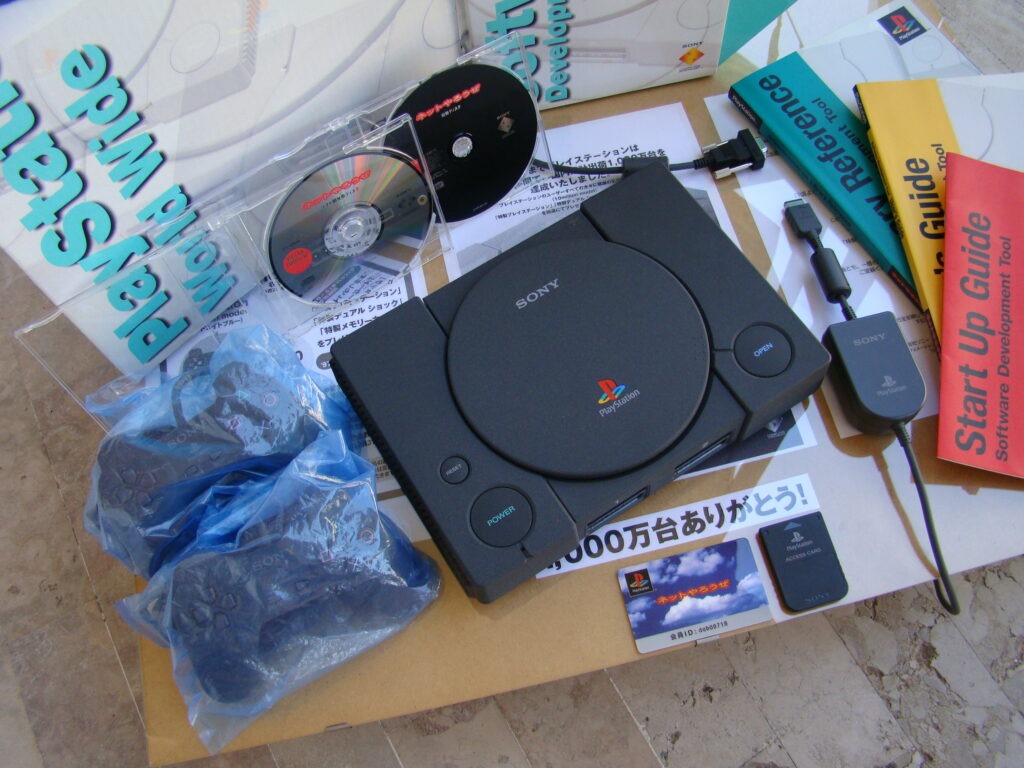
In 1996, Sony released their first consumer-grade development kit aimed at the hobbyist and educational markets. Named Net Yaroze, this kit became iconic for being the genesis point for several big names in the industry and for featuring a really sexy black version of the original PlayStation. Besides that console, the kit came with software packages, libraries and manuals to get you started developing your own games for PlayStation.
Released at the somewhat eye-watering price of $750 US, it was still a far cry from the cost of the professional-grade kits, which were known to cost upwards of $16,000. The Net Yaroze kit was limited in some key ways to make sure it didn’t interfere with their professional offering. The console could only receive game code through its specialised serial port and couldn’t read game code from burned CDs, severely limiting the size of a game made with the kit to the size of the internal RAM (2MB in total).
While the CD drive couldn’t be used for game code, games could, however, stream audio from a CD. This gave rise to a pretty common practice of games not having background music, with the intention that you would insert a music CD instead. This freed up space for other game assets.
So what came out of the whole thing?
With the Net Yaroze, Sony seemed to have successfully created a path for hobbyists to get into developing for the console. While not many projects went on to create fully realised games, a pretty large number of games were published on demo discs included in the Official PlayStation Magazine. If there was a slightly out-of-place, unpolished demo game you played back in the day and never found again, it could have been one of these Net Yaroze games.
Some notable successful figures also got their start with the kit, one of whom is Mitsuru Kamiyama. The creator of Terra Incognita (a fairly complex RPG, considering the limitations) and Fatal Fantasy (a simple proof of concept using re-created assets from Final Fantasy VII) went on to actually work for Square Enix as the director of the Crystal Chronicles series.
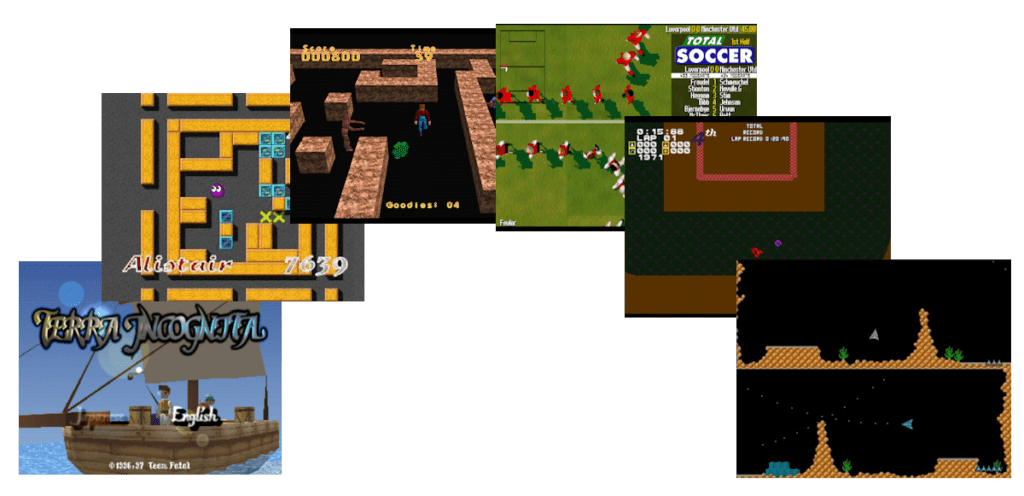
Some notable Net Yaroze projects include:
- Total Soccer Yaroze – A take on the Sensible Soccer games for Amiga
- Haunted Maze – A slightly spooky maze exploration game
- Pushy II – It’s that box pushing puzzle you see remade over and over again.
- Hover Car Racing – A kinda floaty, top-down racer. Think micro machines, but harder to control.
- Gravitation – This was a serious favourite of mine; it plays like Asteroids, but with the added dimension of gravity constantly trying to pull you down, and you blowing up at the slightest touch of the wall.
- Terra Incognita – probably one of the most well-known Yaroze games out there. It’s a 3D action RPG in the same vein as Zelda. It’s a little short for the genre, given the storage limitation, but it’s easily the game here that most feels like a full PS1 release.
Did you remember Net Yaroze?
Did you play any of these on your demo discs? What were your favourites? I definitely played a lot more of Gravitation as a kid than any of the others, but damn, if I don’t find Terra Incognita impressive. Did you have the kit? If you did, tell us what you made.
If you found this odd little piece of PlayStation history interesting, perhaps check out our article about bizarre PlayStation controllers.

You'll see me everywhere here. Mostly I stream and fix things when they break. You might find me writing an odd article or two too. Hope you enjoy the site!


Post Comment